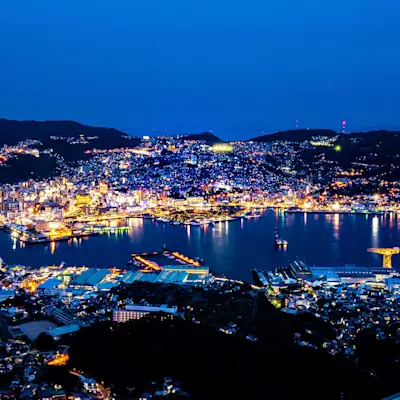
Take a fixed-route bus from Fukuoka Airport to Hakata-eki (Hakata station), then hop on a City Loop Bus (Green) at Hakata-eki Kotsu Center, and get off at Fukuoka Tower Minami-guchi (south entrance). Make your way to the top of Fukuoka's waterfront symbol, which at 234 m is the tallest seaside tower in Japan. From the observation room at 123 m above ground, you can enjoy an exhilarating view of Fukuoka city and Hakata Bay!
After your panoramic view of Fukuoka's cityscape, take a City Loop Bus from Fukuoka Tower Minami-guchi and get off at Sea Hawk Hotel Yahoo! Dome Iriguchi-mae. Hawks Town is an enormous "town" featuring shopping, gourmet cuisine, and amusement facilities. Hawks Town Mall even has a natural hot spring, in addition to shops and restaurants. And at JAL Resort Sea Hawk Hotel's "Sea Hawk Avenue," you can find "HAKATA JAPAN," a Hakata brand that fuses Hakata weaving with innovative fashion design.
Next, get off at Heiwadai Korokan-mae/Fukuoka Joseki (castle ruins). Take a stroll around the Fukuoka Castle ruins (a national designated historical site), which was built by Nagamasa Kuroda (the first lord of Fukuoka) around 400 years ago. Surrounded by a moat, the area still contains a few turrets and gates. Korokan is a guest facility where emissaries from the mainland stayed more than 1,300 years ago. It essentially served as a sort of state guest house. You can tour free of charge the structural remains and see things like ceramics with an international flair, along with the castle ruins, which are preserved in the same state as they were discovered.
Yanagibashi Rengo Market is known as "Hakata's kitchen," where about 70 different shops are crowded into several alleys and lanes about 1 m wide. About 1/3 of the market consists of shops selling fresh fish or dried, salted fish, and you'll find row upon row of karashi mentaiko (spicy fish eggs), fresh fish from the Sea of Genkai, and in the wintertime natural globefish, sea toad, and offal. A large part of the food ingredients for Fukuoka's famous yatais (outdoor food stalls) is said to come from here. The second floor of the long-standing Yoshida Fresh Fish Shop holds a cafeteria, and the kaisendon (rice bowl topped with sashimi, 650 yen) served here is wildly popular. Any kind of fish you choose here is exquisite, not only in terms of freshness, but also the size of the sashimi and the taste of the sauce!
This is the only sake brewery left in the urban area of Fukuoka. Guests can tour the brewery and taste the sake. A well-known Hyaku-nen kura (100-year storehouse) brew is the ginjoshu "Josui," made with luxurious amounts of highly milled Yamada nishiki, a type of rice grown in Fukuoka prefecture. But my personal favorite is the sparkling sake "Awayura." Its light, sweet-and-sour taste, much like champagne, will change your concept of sake completely. It goes down smooth and has a low alcohol content of 7% (about half that of ordinary sake). Its refreshing taste gently soothed my insides, which were a bit tired from being jostled on the bus.
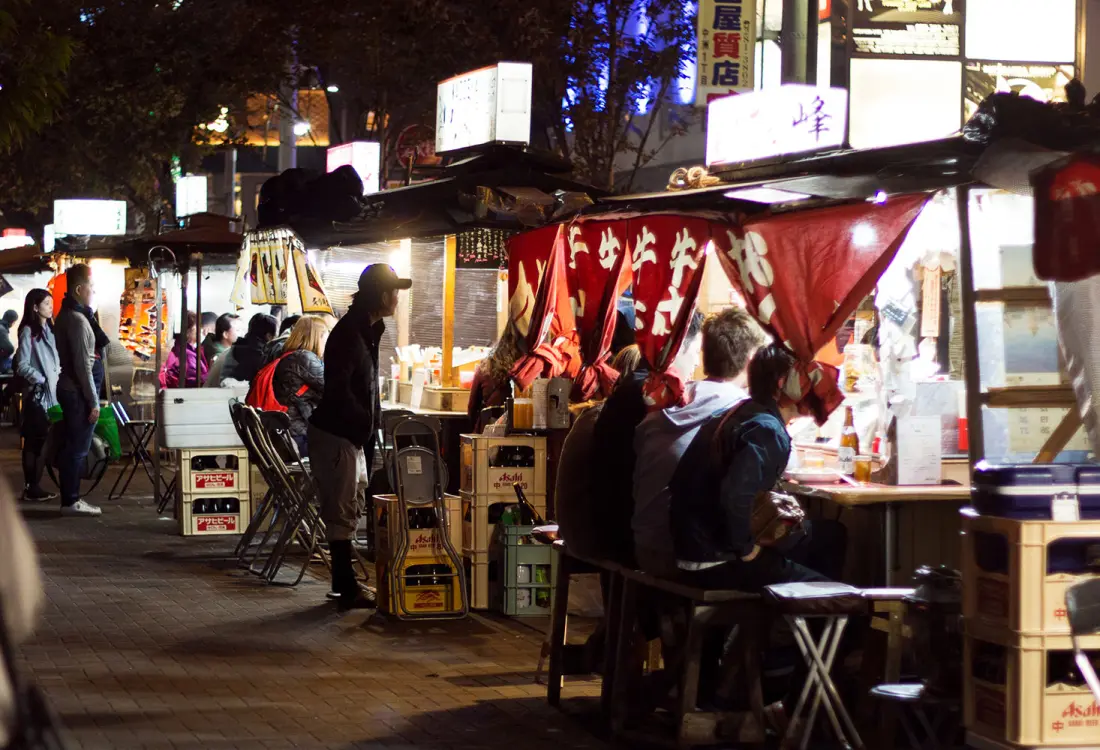
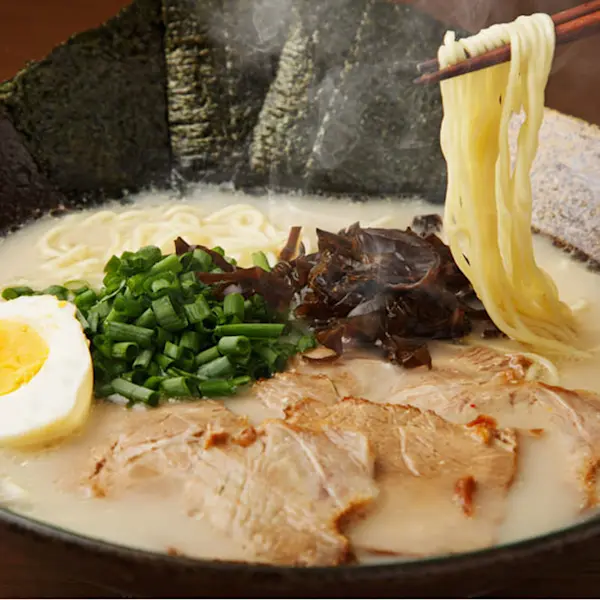
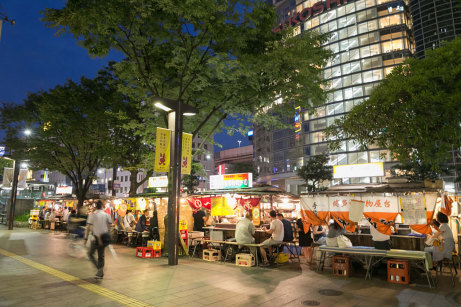
I wrapped up my tour of Hakata with -- you guessed it -- a yatai! For those folks, let me introduce one spot where you can't go wrong. That is the Okamoto yatai, set up in front of Fukuoka Bivi on Tenjin's Watanabedori avenue. The ramen here has a soup base that's superb -- it's rich and full-bodied but doesn't bear the unpleasant distinctive smell of pork. The order rate for noodle refills is also said to be very high. The stall also offers lots of other delicious menu items besides ramen, such as beef "sagari" steak and a dish called "ojichan" (old man) made by boiling rice with champon soup and ingredients.
No matter what your goal -- visiting historic sites, walking around eating, or shopping -- Kyushu's largest city, Fukuoka, is a fun place to visit. This town has lots of attractions packed tightly together, and its numerous fixed-route buses seamlessly cover them all, so you can get anywhere you want by bus! The City Loop Bus gets high marks for usability, as it will take you to the spots you want to visit without fail!
Green Bus Homepage


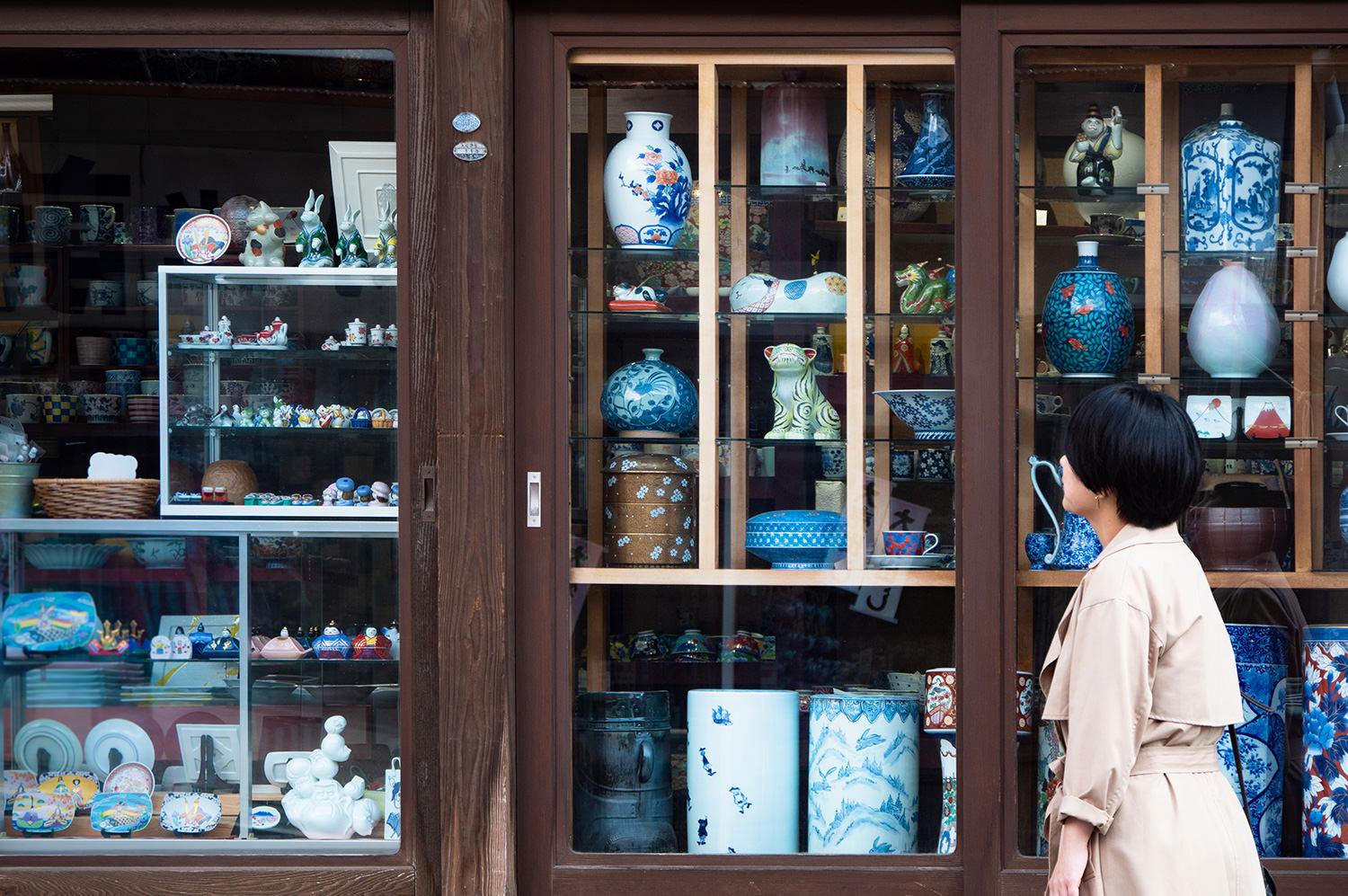
I took a highway bus from Tenjin Bus Center to Hita. There, I roamed around Kyushu's "Little Kyoto," where old private homes and earthen walls still remain. Souvenir shops are lined with geta (wooden clogs) and sandals made from Hita cedar and the now rare bull's-eye design parasols. It feels like you've slipped back in time! At places like the Tenryo Hita Shiryoukan and Hirose Shiryoukan museums, and the old Kangien school, you can learn about the history of Mameda machi.
This is a sake storehouse that stands alongside the Kagetsu River and has a history of about 300 years. At the storehouse-operated shop here, you can try various different kinds of sake. One real stand-out is the "nama nigorizake," the white, cloudy sake that's most popular at Kuramoto and one that gets the locals' seal of approval, with comments like, "You'll get hooked on Kuncho's nigorizake." It's thick, full-bodied, and slightly sweet, but has a crisp, clean aftertaste. It's the type of sake that's good for savoring slowly on a long autumn night. The spacious grounds extend over 2,000 tsubo (71,166 square feet) and include a museum displaying an Edo-period sake storehouse and the tools used in making sake back then, as well as an attached cafe & gallery, "Tabi no Sha." For children and person who can't drink alcohol, there's ice cream with red rice in it, an original of Kuncho Brewery.
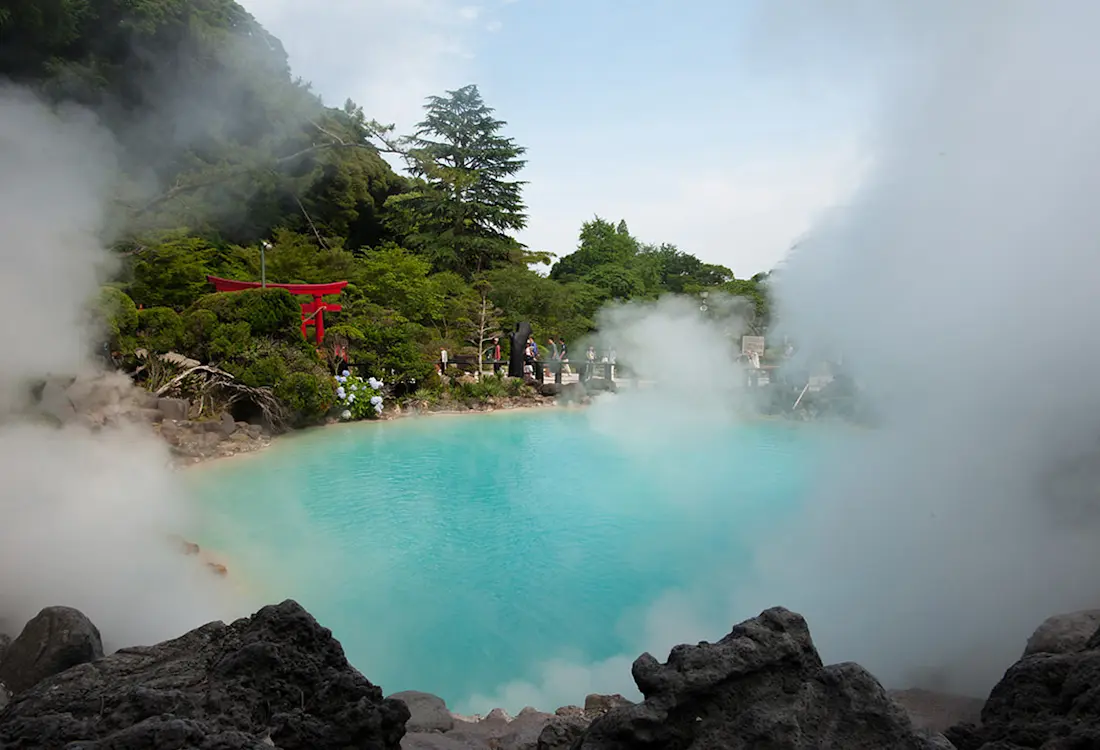
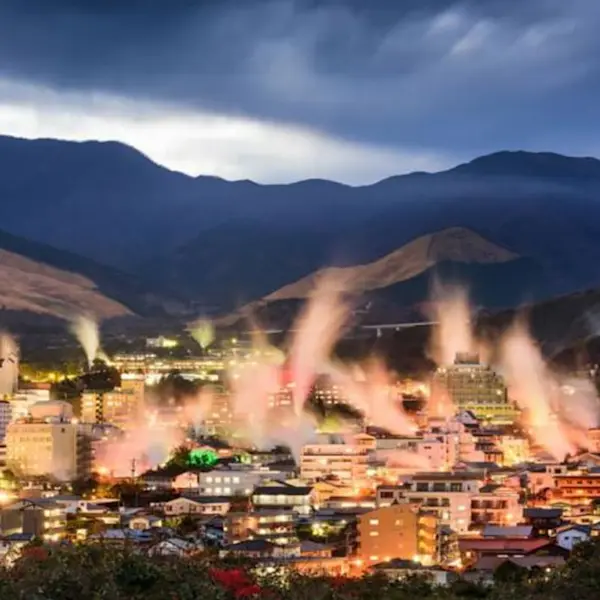
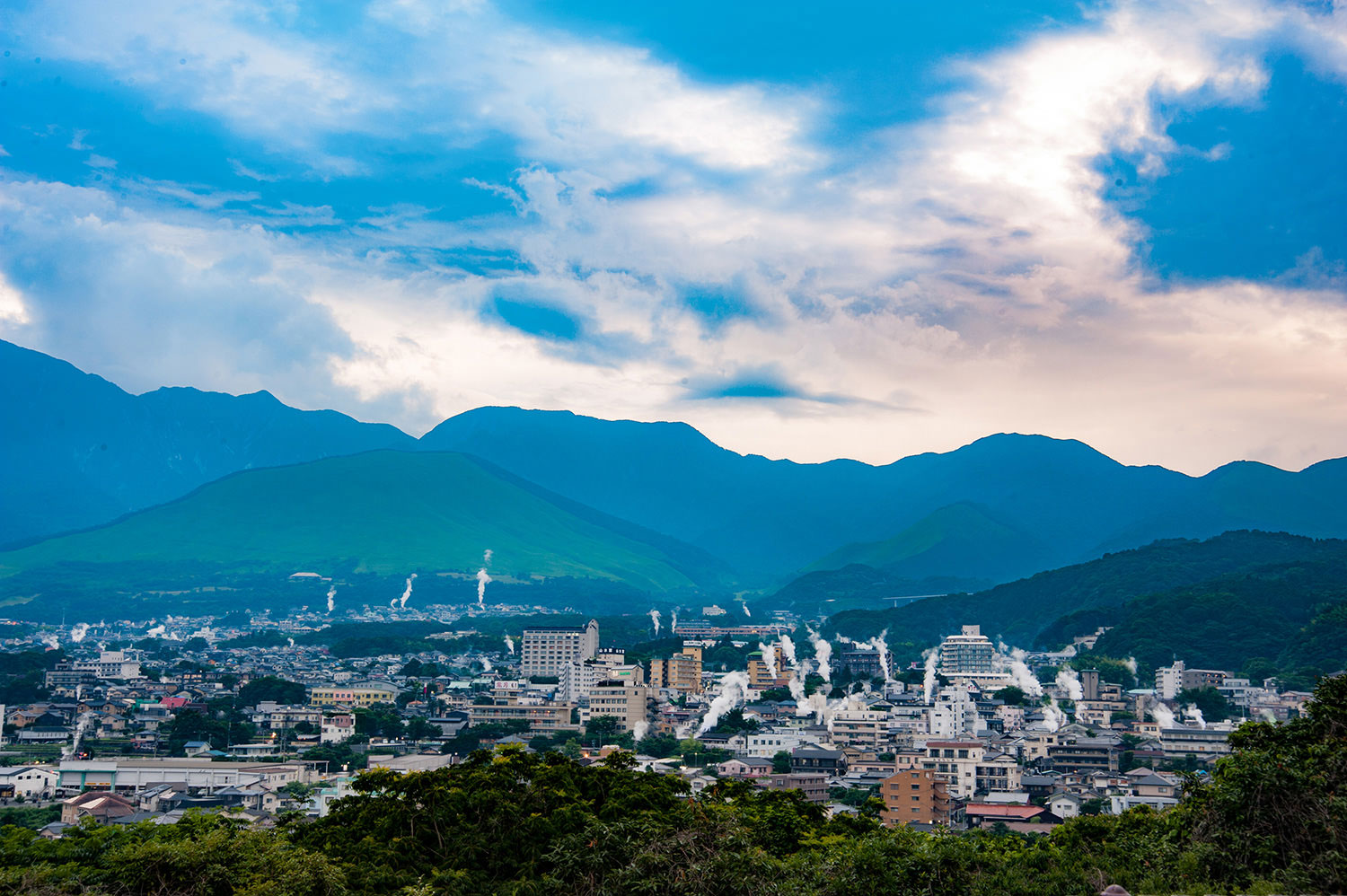
Take a highway bus from Hita Interchange and ride about 1 hour 10 min. Next thing you know, you'll arrive at Beppu Onsen, the hot spring that boasts the largest amount of discharge in Japan. If you get off at the Kannawaguchi stop of the highway bus "Toyonokuni," the hell tour is within walking distance. Or you could first go to Beppu station and get there by fixed-route bus. "Sea hell," "Mountain hell," Cooking pot hell," "Monster mountain hell," and "White pond hell" are concentrated within relatively close range of each other, so if you take a bus as far as "Umi-jigoku-mae" (Sea hell), you can do the rest of your sightseeing on foot. Underneath all that heavily rising steam are ponds the color of cobalt blue or milky white, and mud that makes gurgling, bubbling noises as it spews upwards…. I thoroughly enjoyed these dangers and mysteries created by nature.
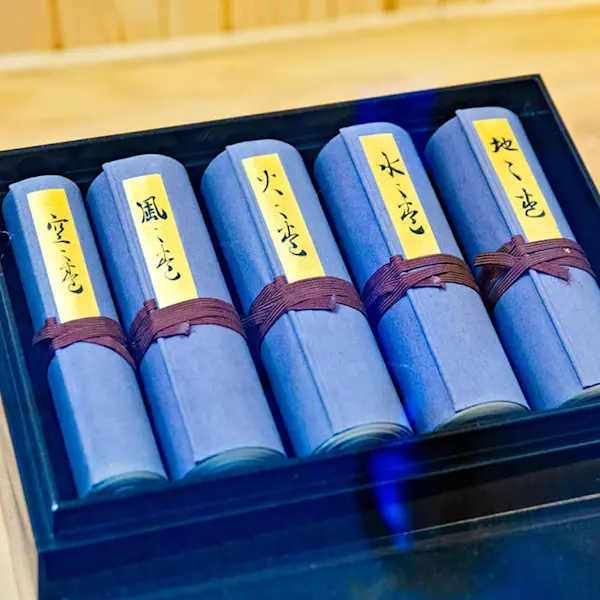
This is Japan's largest fragrance museum, opened in November 2007 next to the campus of Beppu University. The history and culture, etc. of fragrance is displayed in a way that's easy to understand, and you can look, touch, listen, and smell -- in other words, make full use of all your senses to experience "fragrance." Also, an original perfume produced here, Kabosu Eau De Toilette, made quite a splash after being introduced on TV. Speaking of kabosu, this citrus fruit is a specialty product that represents Oita. Its slightly tart but rich and mellow fragrance makes it a great souvenir.
The splendid open-air hot springs at Japanese-style inns (ryokan) are great, but when staying in Beppu, you really should check out a city-operated public bath. Beppu's public baths are not only reasonably priced, but they are also quaint. Takegawara hot spring, in particular, is a 2-story wooden building distinguished by its retro exterior, featuring a roof with Chinese cusped gables. It only costs 100 yen to use the facility's baths, but if you come all this way, why not try the sand bath (1,000 yen)? While you lie face-up in the sand bath, a "sand applier" puts sand that has been warmed by the hot spring onto first your belly, then your legs and shoulders. You can't help but get hooked on this wonderful feeling!
For dinner, I ate at Kaisen Izutsu, famous for kaisendon (rice bowl topped with sashimi) that people line up to buy. Since the restaurant is run by a fresh fish shop, it is only natural that the amount of buzz, the freshness, and the ample variety of food did not fall short of expectations. Though you can't tell it from the picture, the rice is actually vinegared rice. Owner Inagaki-san says that's "because the sashimi loses its flavor when you put it on warm rice." This dish really demonstrates his commitment to having customers eat fresh sashimi in its best condition possible. You can also savor sekiaji and sekisaba (horse mackerel and mackerel caught in the Hoyo Strait) at surprisingly affordable prices. The menu also offers Oita's local specialty dishes "Tori-ten" (chicken tempura) and "Ryukyu" (sashimi marinated in special soy sauce).
I had fun in the exceedingly quaint old city streets, savored the local specialty dishes to my heart's content, and relaxed at the hot spring with the largest amount of discharge in Japan. The basin town of Hita and the hot spring town of Beppu, near the ocean ... By touring two towns with distinctly different atmospheres, I managed to have a wonderfully luxurious trip.


I reached Senomoto Highland about 2 hours after departing Beppu-eki-mae. The cross-Kyushu bus takes a 10-min. break here. At an elevation of 850-900 m above sea level, the highland zone is located between the northern outer rim of Mt. Aso and the Kuju mountain range. It offers a spectacular view of the five peaks of Aso to the south and the Kuju mountain range to the north. The changing leaves of autumn and the Japanese pampas grass waving in the wind make for an especially beautiful landscape, and it has supposedly been chosen No. 1 among the "100 views of Kumamoto nature." The bus stops at the San-ai Rest House, which features souvenirs from all areas of Kumamoto prefecture.
At times when access to the crater is being restricted, or for people with asthma, bronchitis, or heart problems, it is possible to get off the bus at Kusasenri. Kusasenri is a grassland that extends about 1 km in diameter across the side of Mt. Eboshi, one of the five peaks of Aso. Cows and horses graze here, and between April and November you can give horse riding a try. It has several nice facilities, such as restaurants, souvenir shops, Orugoru Kyowakoku (which displays and sells music boxes), and the Aso Volcano Museum, so you can take your time and look around at your own pace.
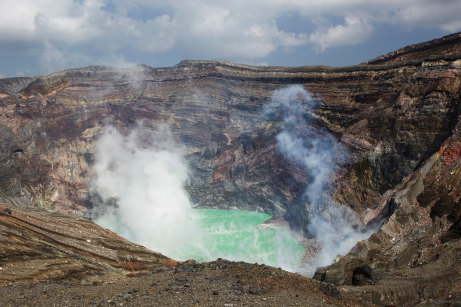
At last, we get to Mt. Aso West station. From here, I took a ropeway (extra charge) to Kakou-eki (crater station). Emerald green in color, Kakou lake is mysterious and beautiful …. When you see the many evacuation bunkers set up in preparation for an eruption, you feel just how intimidating the volcano's presence is. When you come down the walking trail a little ways from the summit, you'll arrive at Sunasenri, a surface covered in sand. The view here is spectacular, too!
※Access may be restricted at times depending on the wind direction.
I got off the bus at Akamizu-eki-mae and stopped by Aso Farm Land (I took a taxi from Akamizu station). While you might think it's a family-oriented recreational facility, it actually has loads of calming spots that adults will love, such as a volcanic hot spring, a magma spa, and a "Doctor Kissfish" where tiny fish eat your dead skin cells. You'll also find an array of delicious dairy products and any souvenirs you haven't yet managed to buy.
At all of the restaurants inside Aso Farm Land, you can drink delicious local beer shipped directly from the brewery♪. The five types they always keep on hand are wheat ale, pale ale, pale lager, porter, and amber ale. The one in the photo is the popular pale lager, smooth and easy to drink. It's easy to gulp down and would likely go well with any type of food, be it Japanese, Western, or Chinese.
As you come out of Aso Farm Land, you'll see the ham and sausage producers Aso Natural J Farm, Inc., located diagonally across the street. At their directly operated restaurant next door, Bayern, you can eat freshly made ham and sausage with bread or soup, etc. (of course you can get it to go, too). The photo shows a sausage platter prepared especially for us (this particular combination is not available on the menu). These are all different kinds: herb weiners, coarsely ground sausage, and spicy polynesian sausage. They all have different tastes and firmness, so I had fun doing a taste test, in this case not for sake but for sausage.
I thought that Aso was a tourist spot you couldn't visit without a car. But as it turns out, if you take a cross-Kyushu bus that cuts across Kyushu from Beppu to the Kumamoto Airport and into the city of Kumamoto, you can get around while gazing at the most majestic natural landscape in Kyushu. And on the Aso Liner, which includes a 90-min. break and lunch at Mt. Aso West station, you can even tour the crater. If you have extra time before your plane departs, you can even enjoy sightseeing inside Kumamoto city.
![Kyushu Tourism Information [ Japan ]](/img/copy.gif)